
What You’ll Learn
- What medical payments coverage is on a California renters policy.
- Why this specific coverage matters, even if you have health insurance.
- How it kicks in when someone gets hurt at your rented place.
- Typical coverage limits and what they mean for your wallet.
- The difference between medical payments and liability coverage.
- Steps to figure out the right amount of protection for your situation.
Understanding Medical Payments Coverage for California Renters
So, you’ve got a great apartment in, say, Santa Monica or a rental home out in the Inland Empire. You’ve probably thought about renters insurance to protect your stuff from a fire or a burst pipe. That’s smart. But there’s a part of your policy that often gets overlooked, and it’s super important for anyone who has guests over: medical payments coverage.
This isn’t about *your* medical bills. That’s what your health insurance is for. Instead, medical payments coverage — sometimes called “MedPay” for short — helps pay for minor medical expenses if someone gets hurt at your rented home and it’s not a big enough deal to involve a full-blown liability claim. Think of it as a goodwill gesture, a way to quickly cover a friend’s sprained ankle or a neighbor’s scraped knee without a lot of fuss. It’s about being a good host, even when accidents happen.
For most California renters, this coverage often feels like an afterthought. You might have it bundled in, or maybe you saw a line item for $1,000 or $5,000 and just shrugged. But here’s the thing: California’s medical costs are no joke. A simple urgent care visit can quickly hit a few hundred dollars, especially in places like the Bay Area or Orange County. Knowing what this part of your policy does, and making sure you have enough of it, can save you a real headache down the road.

Step 1: What Exactly is Medical Payments Coverage?
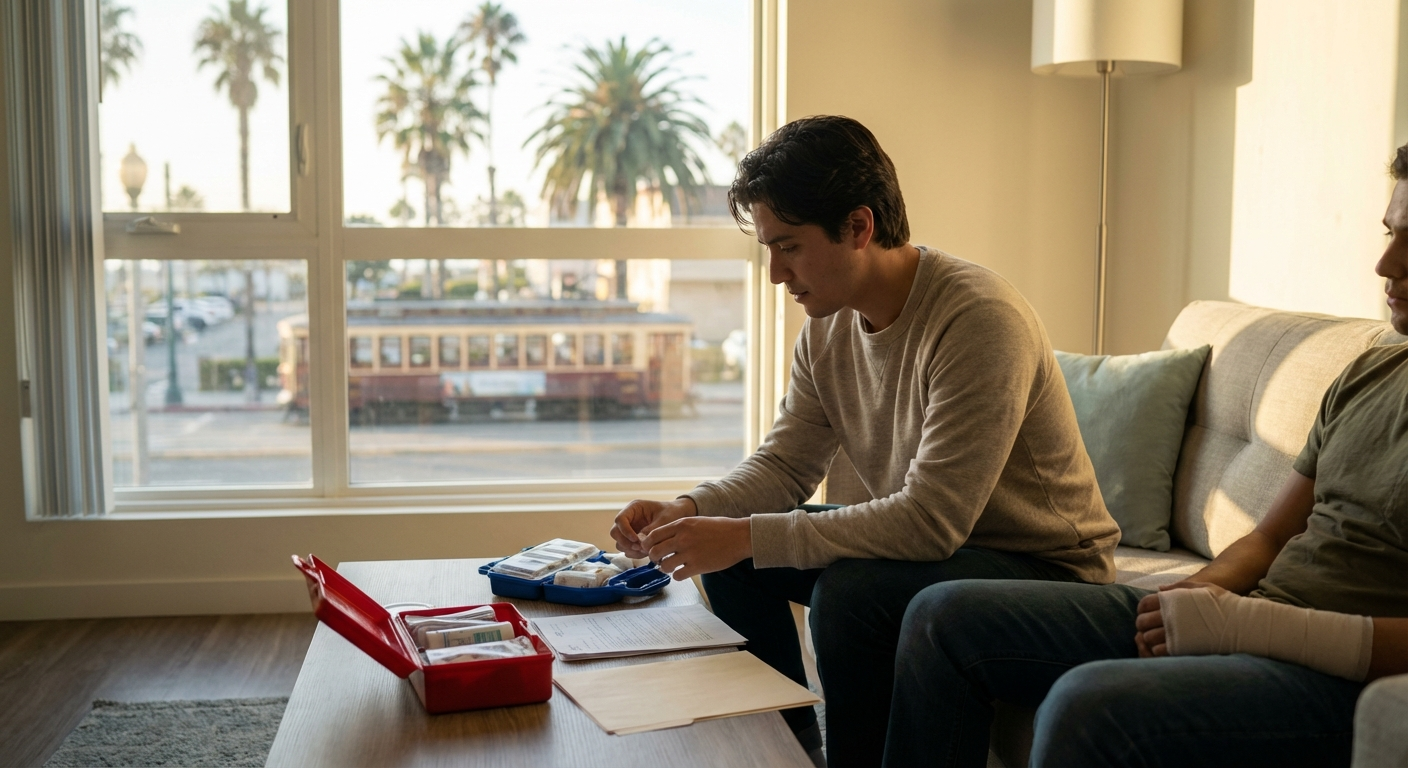
Imagine your friend is visiting your apartment in Ventura County. They trip over a rug you forgot to straighten, fall, and twist their wrist. It’s not a huge deal, maybe just a sprain, but it definitely needs a doctor’s visit and some X-rays. This is exactly where medical payments coverage steps in.
It’s a specific part of your renters insurance policy designed to cover small medical expenses for people who get hurt on your property, regardless of who was at fault. Yes, you read that right: *regardless of fault*. This is a key difference from the liability portion of your policy. With MedPay, you don’t have to be found negligent. It’s simply there to cover reasonable and necessary medical, surgical, X-ray, dental, ambulance, hospital, and funeral expenses incurred by a guest injured on your property.
Most policies offer limits ranging from $1,000 to $10,000. Some insurers like State Farm or Farmers might even offer higher. It’s not meant for catastrophic injuries that would require a lawsuit; that’s what your personal liability coverage is for. Instead, it’s for those smaller, immediate medical needs that pop up unexpectedly.
Step 2: Why You Absolutely Need It (Even with Health Insurance)
Many people think, “My friend has health insurance, so why do I need this?” Good question. The short answer is yes, their health insurance would likely cover them. The real answer is more complicated. Here’s why you still want medical payments coverage:
- It’s a no-fault benefit: This is huge. If your friend trips and falls, you don’t want to get into a debate about whether it was your fault or theirs. MedPay just pays the bills up to your chosen limit, no questions asked about blame. This can keep a small accident from turning into a big argument.
- Prevents liability claims: Sometimes, a small injury can escalate. If your friend has to pay out of pocket for an urgent care visit, they might start thinking about whose rug it was. Offering to cover their immediate medical costs through your MedPay can often prevent them from pursuing a more extensive liability claim against you. It’s a way to smooth things over quickly and keep the peace.
- Covers deductibles and co-pays: Even if your friend *does* have health insurance, they’ll likely face a deductible or co-pay. MedPay can cover those out-of-pocket costs, making it easier for them to get treatment without financial stress.
- Peace of mind: Honestly, knowing you can take care of a friend or neighbor if they get hurt at your place is just a good feeling. It’s about being responsible and considerate.
Think about the alternative. If you don’t have this coverage, and a guest gets hurt, you might be left scrambling to pay for their medical bills yourself, or worse, facing a much larger liability claim. Which brings up something most people miss:
Step 3: Medical Payments vs. Personal Liability – A Big Difference
These two often get confused, but they do very different jobs on your renters policy. Understanding the distinction is key.
Personal Liability Coverage
This is the big gun. Personal liability protects you if you’re found legally responsible for someone else’s injury or property damage. For example, if your dog bites a visitor and they need extensive surgery, or if a fire starts in your apartment and damages your neighbor’s unit, your liability coverage would kick in. This part of your policy also typically covers legal defense costs if you’re sued. Most renters policies in California offer liability limits starting at $100,000, but many folks opt for $300,000 or even $500,000, especially with how quickly legal costs add up here.
Medical Payments Coverage
As we’ve discussed, this is for smaller, immediate medical expenses, regardless of fault. It’s not about proving you were negligent; it’s about covering those initial bills. The limits are much lower, usually maxing out at $10,000. It’s a quick fix, not a legal battle.
So, while both deal with injuries to others, personal liability is for when you’re legally at fault and facing a potentially large claim or lawsuit. Medical payments is for smaller incidents, where you want to cover medical bills without assigning blame or involving lawyers. They work together, but they’re not interchangeable. One is a shield against major lawsuits; the other is a helpful bandage for minor bumps.
Step 4: Choosing the Right Coverage Limit for Your California Life
Most renters policies in California automatically include some medical payments coverage, often starting at $1,000 or $2,500. But is that enough? Probably not. A visit to an urgent care clinic in Los Angeles for an X-ray and a doctor’s consultation could easily hit $500 to $1,000. Add a follow-up visit, maybe some physical therapy, and you’re quickly over that initial limit.
Consider your lifestyle:
- Do you entertain often? The more guests you have, the higher the chance of a minor accident.
- Do you live in an older building? Uneven floors, tricky stairs – these can increase risk.
- Do you have pets? Even the friendliest dog can accidentally trip someone.
- What’s the cost of medical care in your area? A sprain in Redding might cost less to treat than one in San Francisco.
Most insurance professionals, including Karl Susman at California Renters Quote, CA License #0B75129, would suggest considering at least $5,000 in medical payments coverage. Moving up to $10,000 usually doesn’t cost much more on your annual premium and offers a lot more breathing room. It’s a small expense for a potentially big benefit.
For instance, if your policy costs $200 a year for $1,000 in MedPay, bumping it to $5,000 might only add $15-$20 to that annual bill. That’s less than a fancy coffee a month for a lot more protection. It’s a good investment, especially considering how easy it is for things to go wrong unexpectedly.
Step 5: What Medical Payments Doesn’t Cover (Important Distinctions)
While MedPay is great for guests, it’s not a catch-all. Here’s what it generally won’t cover:
- Your own medical bills: This coverage is strictly for guests or others injured on your property. Your own injuries are covered by your health insurance.
- Injuries to household members: If your roommate or a family member living with you gets hurt, MedPay typically won’t cover them. They’re considered part of your household.
- Intentional injuries: If you intentionally hurt someone, no insurance policy is going to cover that.
- Injuries off your property: If an incident happens away from your rented home, MedPay usually doesn’t apply. For example, if your friend trips on the sidewalk outside your building, that’s likely not covered.
- Long-term care or lost wages: MedPay is for immediate medical expenses. It won’t cover ongoing care or income lost due to an injury. That’s where a liability claim might come in, if you’re found at fault.
Understanding these limitations helps you set proper expectations. It’s a specific tool for a specific job: taking care of those smaller, immediate medical costs for your guests.
Step 6: Getting the Right Policy for Your California Rental
You’ve got a good handle on what medical payments coverage does. Now, how do you make sure you have the right amount for your situation? It starts with a conversation.
Talk to an experienced insurance agent. Someone like Karl Susman at California Renters Quote knows the ins and outs of California renters insurance. They can walk you through your options, explain how different coverage limits impact your premium, and help you understand the nuances of your policy.
Don’t just grab the cheapest policy you find online without really looking at the details. A policy that looks inexpensive might have very low MedPay limits, leaving you exposed. In California, where the cost of living and medical care is higher than many other states, skimping on this small but mighty coverage isn’t usually a smart move. Think about all the folks living in dense areas like San Diego or Sacramento – more people, more chances for minor slips and falls.
Consider getting a few quotes. Compare the medical payments limits alongside your personal property coverage and liability limits. A good agent won’t just sell you a policy; they’ll help you understand what you’re buying.
Ready to explore your options and get a clearer picture of what medical payments coverage means for your California renters insurance? Click here to get a quote today!
FAQ: Your Medical Payments Questions Answered
Q1: Will my renters insurance medical payments cover injuries if my pet bites someone?
A: Generally, no. Medical payments coverage is usually for non-pet-related incidents like slips and falls. Injuries caused by your pet would typically fall under the personal liability section of your renters insurance, assuming you’re found responsible and your policy covers animal liability. Some policies have exclusions for certain breeds or types of animals, especially in California, so it’s always best to check with your agent.
Q2: Does this coverage apply if a guest gets hurt in the common areas of my apartment building, like the lobby or gym?
A: Not usually. Your renters insurance generally covers incidents that happen within your rented unit or areas that are exclusively yours, like a private balcony. Common areas of an apartment building are typically the responsibility of the landlord or property management, and their commercial liability insurance would cover injuries there. It’s always good to confirm with your agent, but don’t count on your MedPay for common area accidents.
Q3: What if the injured guest has really good health insurance? Do I still need MedPay?
A: Yes, you absolutely do. While their health insurance would cover their medical bills, MedPay on your policy serves a different purpose. It’s a no-fault benefit that can cover their co-pays or deductibles, and more importantly, it can prevent a small incident from turning into a liability claim against you. It’s a gesture of goodwill and a way to quickly resolve minor issues without involving blame or legal action. It keeps things friendly.
Q4: How quickly does medical payments coverage pay out compared to a liability claim?
A: Medical payments claims are typically much faster and simpler to process. Since fault isn’t a factor, the insurer just needs documentation of the injury and the medical bills. Liability claims, on the other hand, often involve investigations, determining fault, and potentially legal proceedings, which can take a long time – sometimes months or even years. MedPay is designed for quick resolution of minor expenses.
Making sure you’re properly protected as a renter in California means looking at all the pieces of your policy. Medical payments coverage might seem small, but it’s a mighty safeguard for those unexpected bumps and scrapes that can happen when friends and family gather. Don’t leave yourself exposed.
To learn more about your options and get personalized advice from an expert in California renters insurance, reach out to Karl Susman at California Renters Quote, CA License #0B75129. Or, if you’re ready to see how affordable this protection can be, get a quote now!
This article is for informational purposes only and does not constitute financial advice.