
When Water Happens: Protecting Your Stuff in a California Rental
Water damage. Just reading those words can make a renter’s stomach drop. Maybe you’ve seen a neighbor’s apartment flooded from a burst pipe. Perhaps you’ve worried about that old water heater in your building, or what an intense atmospheric river might do to your ceiling. It’s easy to feel lost trying to figure out what renters insurance actually covers when water starts making trouble. You’re not alone in that confusion. Many people assume their landlord’s policy protects them, or that insurance is just for big fires or break-ins. The truth is, water damage is one of the most common, and often most expensive, claims renters face.
What Renters Insurance Actually Covers for Water Damage
Let’s talk about what’s typically in your policy. Most renters insurance policies in California include a few key pieces that kick in when water strikes.
First, there’s your **personal property coverage**. This is the big one. If a pipe bursts in your wall, an upstairs neighbor’s bathtub overflows, or your dishwasher suddenly decides to turn into a fountain, your policy generally covers the cost to repair or replace your damaged belongings. Think about it: your laptop, your clothes, that new couch, your treasured family photos. All that stuff. It adds up fast.
But wait — there’s more. What if the water damage is so bad you can’t live in your apartment for a while? Maybe they need to tear out walls to dry everything. That’s where **loss of use coverage** comes in. It helps pay for temporary housing, like a hotel, and extra living expenses, such as food, if your rental becomes uninhabitable due to a covered peril. No one wants to sleep on a friend’s couch for weeks. This coverage can be a real lifesaver.
Which brings up something most people miss. What if *you* cause the water damage? Say you accidentally leave the faucet running and it floods the unit below you. Or your washing machine hose snaps, sending water into the hallway and damaging the building’s flooring. That’s where **personal liability coverage** steps up. It can cover the costs if you’re found responsible for damage to someone else’s property or even injuries that occur because of your actions. This is incredibly important because those costs can soar into the tens of thousands, easily.

The “Sudden and Accidental” Rule — It’s a Big Deal
Here’s where it gets interesting, and sometimes a little tricky. Renters insurance generally covers water damage that is “sudden and accidental.” What does that mean?
It means things like:
* A pipe bursting suddenly in the wall or under the sink.
* Your toilet overflowing because of a mechanical issue.
* An appliance like your dishwasher or washing machine malfunctioning and leaking.
* Water pouring in from a storm because a tree fell on the roof, creating a hole.
These are events you couldn’t have reasonably predicted or prevented. The damage happens quickly, without warning.
But here’s the thing. Gradual damage? That’s usually a no-go. If you’ve had a slow leak under your sink for six months and finally notice it when mold starts growing, that’s often not covered. Why? Because the insurance company expects you to maintain your home and report issues promptly. They don’t cover neglect or maintenance problems. This is a common point of friction for many renters, and honestly, it’s a hard lesson to learn if you’re caught off guard.
What Renters Insurance Doesn’t Cover for Water Damage
It’s just as important to understand what your policy probably *won’t* cover.
First, **flooding**. This is a big one, especially in California. From the Central Valley to coastal towns in Ventura County, we’ve seen our share of serious floods. But standard renters insurance policies don’t cover flood damage. Not from rising rivers, heavy rainfall that overtakes the streets, or coastal storm surges. For that, you’d need a separate flood insurance policy, typically through the National Flood Insurance Program (NFIP). Most renters don’t even think about flood insurance, but if you live in a low-lying area or near a river, it’s definitely something to consider.
Then there’s that **gradual damage** we just talked about. Things like slow leaks, condensation, or persistent dampness that leads to mold or rot over time. If the damage could have been prevented with regular maintenance or prompt reporting to your landlord, your policy likely won’t cover it.
Also, your policy won’t cover damage to the **landlord’s property** unless you’re found liable for it. For example, if a pipe bursts that’s part of the building’s infrastructure, your landlord’s property insurance covers the building repairs. Your renters policy covers *your* stuff. Big difference.
Finally, and this might seem obvious, but **intentional damage** or damage resulting from your own gross negligence won’t be covered. Don’t go trying to make a swimming pool in your living room.
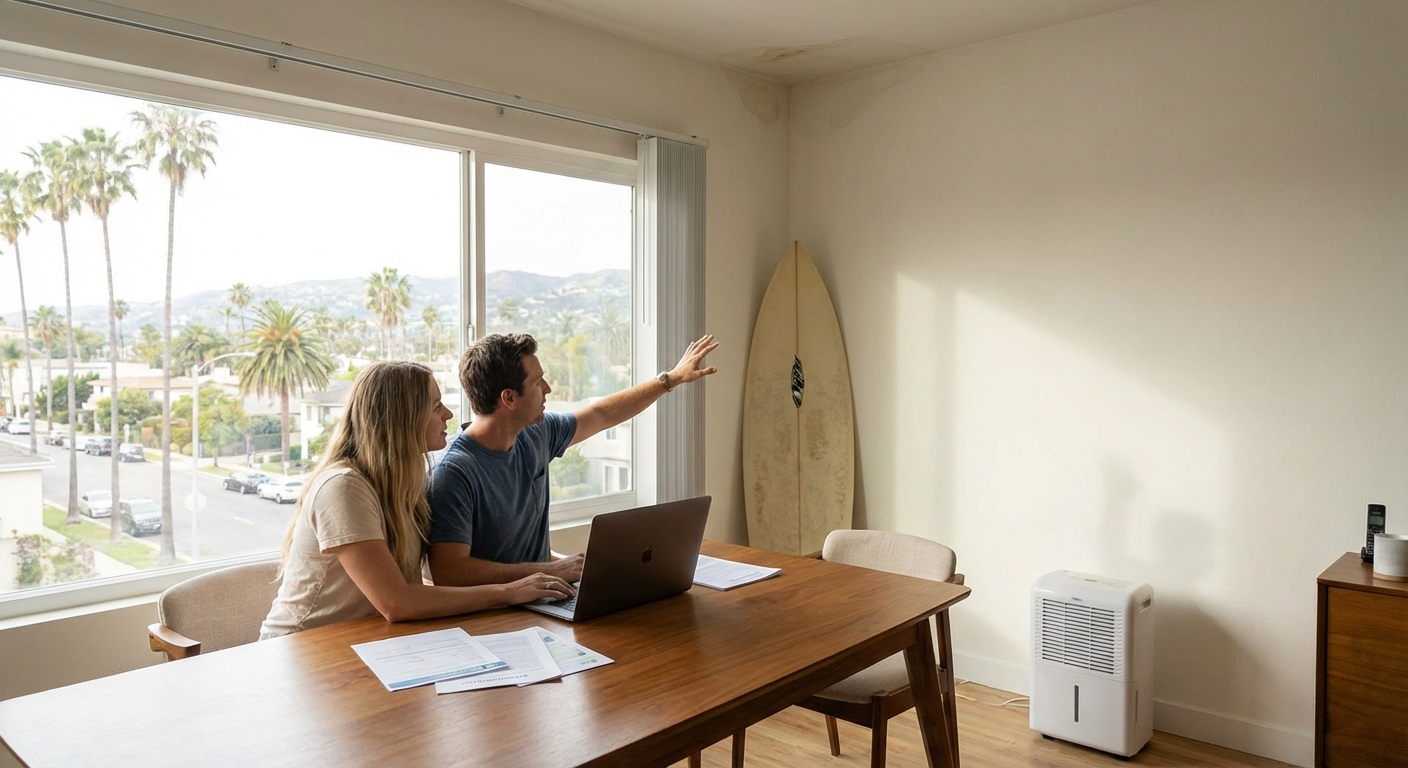
Why California Renters Need This Protection
California’s a wild place, isn’t it? We get sunshine, sure, but we also deal with a unique set of challenges that make water damage a real threat.
Think about our aging infrastructure. Many apartment buildings, especially in places like the Valley or older parts of the Inland Empire, have pipes that are decades old. These are more prone to bursting, especially with shifts in temperature or ground movement.
And speaking of ground movement, while renters insurance won’t cover earthquake *damage* itself (that’s another separate policy), the indirect effects can be tricky. An earthquake might rattle an old pipe loose, causing a leak that eventually bursts. If it’s sudden, your renters policy might still respond.
Then there are the weather patterns. We’ve seen “atmospheric rivers” dump incredible amounts of rain, sometimes leading to localized flooding or overwhelmed drainage systems. Even if it’s not a full-blown flood, heavy, sustained rain can expose weaknesses in a building’s roof or windows, leading to leaks that damage your personal property.
California’s unique blend of old buildings, seismic activity, and intense weather patterns means water damage isn’t just a hypothetical problem; it’s a very real and present danger for renters.
The Landlord’s Policy vs. Your Policy: A Common Misunderstanding
This is probably the biggest piece of confusion out there. Many renters think, “Oh, my landlord has insurance, so I’m covered.” Not always.
Your landlord’s insurance policy covers the *building itself* – the walls, the roof, the fixed appliances, the structure. It protects *their* investment. It does not, however, protect *your personal belongings*. If a fire rips through your apartment or a pipe bursts, their policy will help them rebuild the walls, but it won’t replace your burned furniture or your water-logged electronics. That’s your responsibility.
Honestly, it’s a common and understandable mistake to make. But it’s also why having your own renters policy is so important. It fills that gap, providing a safety net for your life’s possessions and for any liability you might face.
Getting the Right Policy in California
So, how do you make sure you’re properly protected?
First, take stock of your belongings. Seriously. Walk through your apartment with your phone, taking pictures or videos. Open closets, look in drawers. You’ll be surprised how much stuff you own, and how quickly its value adds up. This helps you figure out how much personal property coverage you actually need. Most policies offer “replacement cost” coverage, which pays to replace your old items with new ones, rather than “actual cash value,” which only pays what your old items were worth at the time of damage, after depreciation. Replacement cost is almost always the better choice.
Next, talk to an experienced professional. Insurance can feel like a maze, especially with all the California-specific rules and risks. That’s where someone like Karl Susman comes in. He’s been helping California renters for years through California Renters Quote, and he knows the ins and outs of what you need. You can reach him at (877) 411-5200. His CA License is #0B75129. Getting advice from a human who understands your specific situation makes all the difference.
It’s not about just getting *any* policy. It’s about getting the *right* policy for your unique situation in California.
Ready to explore your options and get the peace of mind you deserve? Get a renters insurance quote today.
Frequently Asked Questions About Renters Insurance and Water Damage
Does renters insurance cover mold?
Generally, mold damage is covered only if it results from a *covered peril* like a sudden burst pipe. If the mold is from a long-term, gradual leak or poor maintenance, it’s often not covered. It’s a tricky area, and policies can vary.
What if my landlord is responsible for the water damage?
If the damage is due to your landlord’s negligence or a building issue they should have fixed, their property insurance would typically cover the building repairs. Your renters insurance would still cover your personal belongings, and then your insurance company might try to get reimbursed from your landlord’s insurer.
Do I need flood insurance as a renter in California?
If you live in a flood-prone area, absolutely consider it. Standard renters insurance doesn’t cover flood damage. Even if you don’t think you’re in a flood zone, heavy rains can cause localized flooding. It’s always best to check with an agent like Karl Susman to assess your risk.
How much liability coverage do I really need?
Many experts recommend at least $100,000 in liability coverage, but more is often better if you can afford it. If you accidentally cause extensive damage or someone is seriously injured, legal fees and settlement costs can quickly exceed that amount.
Water damage can be a sudden, messy, and expensive headache for California renters. Knowing you’ve got the right protection in place can turn a potential disaster into a manageable inconvenience. Don’t leave your belongings, or your financial future, to chance.
Find out how affordable protecting your California rental can be. Click here to get a personalized renters insurance quote.
This article is for informational purposes only and does not constitute financial advice.