
Maya’s Heirloom and the California Dream Apartment
Maya found her perfect spot in Silver Lake. An apartment with a little balcony, sunlight pouring into the living room, and enough space for her vintage record player. Moving to Los Angeles had been a whirlwind, but this place felt like home. She’d unpacked her boxes, hung art on the walls, and finally, carefully, placed her grandmother’s pearl necklace and her own engagement ring in a small velvet box on her dresser. These weren’t just pretty things; they were memories, family.
She’d signed up for renters insurance, of course. Everybody told her to get it. It seemed like a no-brainer, especially living in a busy city. She figured, “It covers everything, right?” If there was a fire, or if someone broke in, her stuff would be safe. She wasn’t wrong, exactly. But the real answer is more complicated.
Most people think their renters policy is a giant safety net, good for anything that goes wrong. It covers furniture, clothes, electronics – all the things you’d expect. But when it comes to those special, often expensive, pieces like Maya’s necklace or ring, standard coverage often hits a wall. A low, sometimes surprisingly low, wall.
The Fine Print of Standard Renters Policies
Your average renters insurance policy does a lot of heavy lifting. It’ll protect your belongings from common perils like fire, smoke, theft, vandalism, and certain types of water damage. Say a pipe bursts in your apartment building in the Valley, ruining your new sofa and your favorite rug. Your policy should step in. If a burglar makes off with your laptop and TV, you’re likely covered up to your policy’s personal property limit.
Here’s where it gets interesting. That overall limit, perhaps $25,000 or $50,000 for all your stuff, isn’t a free-for-all. Insurance companies often put special limits on certain categories of items. Things like firearms, cash, collectibles, and yes, jewelry. For jewelry, a typical California renters policy might only cover it up to $1,000 or $2,500 for *all* pieces combined, in the event of theft. Not per item, but total.
Think about Maya’s grandmother’s necklace. What if it’s an antique, worth $5,000? And her engagement ring, maybe it’s valued at $8,000. Under a standard policy with a $2,500 jewelry sub-limit, if a thief got into her Silver Lake apartment and took both, she’d only get that $2,500 back. Big difference.

What Standard Renters Insurance *Doesn’t* Always Cover (or Covers Poorly)
Those sub-limits are a real eye-opener for many. But that’s not the whole story. Standard renters insurance also has specific ways it handles *how* an item is lost or damaged.
Imagine Maya takes off her engagement ring to wash dishes and it slips down the drain. Or maybe she’s hiking in Griffith Park, trips, and a diamond pops out of its setting, vanishing into the dirt. These situations fall into a category insurers call “mysterious disappearance” or “accidental loss.” Many standard renters policies don’t cover those types of losses at all. They’re focused on “perils” like theft or fire. Losing something because you were careless? That’s usually on you.
This can be a tough pill to swallow. You pay for insurance, expecting it to protect your most cherished items. Then you find out the rules are stricter than you thought. A standard policy isn’t designed to be a blanket “wear-and-tear” or “oops-I-lost-it” policy for every piece of jewelry you own. It has its boundaries.
Scheduling: Your Jewelry’s VIP Pass
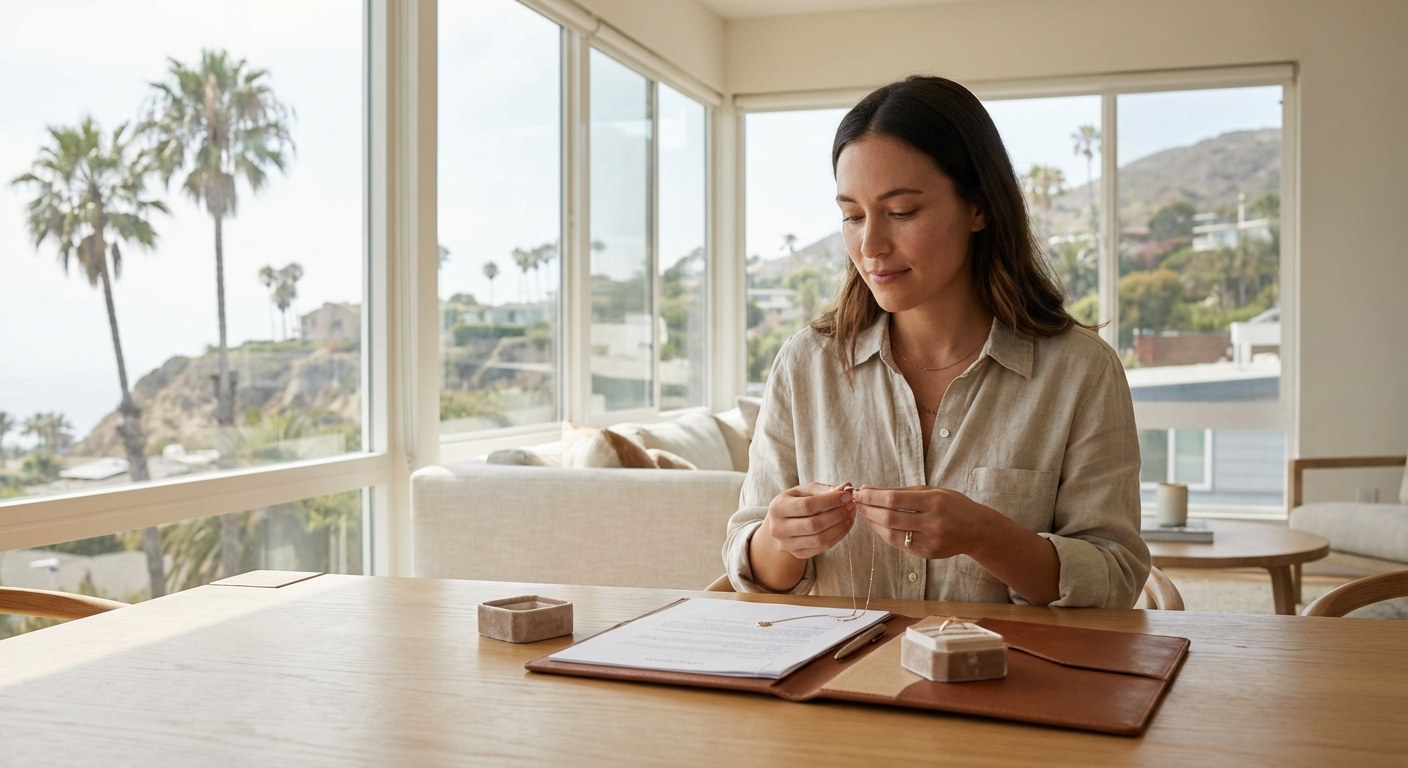
So, what’s the fix for Maya and her sentimental pieces? It’s called “scheduling” an item. Sometimes it’s referred to as a “personal articles floater” or an “all-risk” rider. This is an endorsement you add to your renters policy, specifically listing individual pieces of jewelry.
When you schedule an item, you usually need to provide an appraisal from a reputable jeweler. This appraisal sets the agreed-upon value. You pay a separate, often small, premium for each scheduled item. In return, that specific piece of jewelry gets a much broader range of coverage.
This means if Maya schedules her engagement ring for its full $8,000 appraised value, and it slips down the drain, she’s covered. If a diamond falls out while she’s out and about, she’s covered. It typically covers almost any kind of loss or damage, including mysterious disappearance, accidental damage, and theft, up to the scheduled amount. This is a huge step up from the limited coverage you’d get otherwise.
Think of it like this: your renters policy is a general admission ticket. Scheduling an item is like buying a backstage pass for that specific piece. It gets special treatment, more access, and better protection.
Why California Makes Jewelry Coverage a Bit Different
California isn’t just a place; it’s a whole vibe. And that vibe includes some unique challenges for insurance. The state’s natural risks – think wildfires in Ventura County or the potential for earthquakes across the state – affect how insurers operate. While a standard renters policy won’t cover earthquake damage to your building (you’d need a separate earthquake policy for that), a major quake could still lead to a total loss of your personal property, including jewelry. Wildfires, like those devastating communities near Santa Clarita or in the Inland Empire, can also mean a complete loss of everything you own.
Recently, several big insurers, like State Farm and Farmers, have been pulling back or limiting new policies in California. This creates a tougher market for everyone, even renters. Less competition can sometimes mean fewer options or higher prices. The state’s unique regulatory environment, influenced by things like Prop 103, also shapes how policies are written and what they can charge. It all adds up to a situation where understanding your options for valuables isn’t just smart; it’s essential.
Getting Your Jewelry Appraised: Not Just for Show
If you’re thinking about scheduling your jewelry, or even just want to know its true worth, an appraisal is your first step. Don’t skip this. A professional appraisal from a certified jeweler provides a clear, documented value for your pieces. This isn’t just a guess; it’s an expert’s assessment of its retail replacement value.
How often should you get one? Jewelers often recommend updating appraisals every three to five years. Why? The value of precious metals and stones fluctuates. What something was worth in 2018 might be very different today. Gold prices shift. Diamonds gain or lose value. An outdated appraisal could mean you’re underinsured if you have to make a claim.
Always keep your appraisal documents safe. Store them digitally and in a physical location away from your home — perhaps in a safe deposit box or with a trusted relative. If your jewelry is lost in a fire, you don’t want the appraisal documents going up in smoke with it.
The Cost of Peace of Mind: What to Expect
Most people assume scheduling jewelry will be incredibly expensive. Often, it’s not. The cost of scheduling an item depends on its appraised value. Generally, you might pay anywhere from $1 to $2 per $100 of value per year. So, for Maya’s $8,000 engagement ring, it might add an extra $80 to $160 to her annual premium. That’s a small price to pay for genuine peace of mind, knowing that if it vanishes or breaks, she won’t be out thousands of dollars.
Factors influencing the cost include the value of the item, your location (some areas in LA might have higher theft rates, for example), and the specific insurer. You’ll also still have a deductible on your main renters policy, but scheduled items often have a very low or even zero deductible for certain types of claims.
Thinking about getting a quote for renters insurance, or adding coverage for your special jewelry? It’s easier than you might think.
Ready to see how affordable protecting your valuables can be? Get a quote today!
Navigating the Market with a Pro
The California insurance market can be tricky. With so many options, and some insurers changing their tune, it’s tough to know if you’re getting the best deal or the right coverage. That’s where an independent insurance agent really shines. Someone like Karl Susman, with California Renters Quote, doesn’t work for just one company. He works for you.
An independent agent can shop around with multiple insurers – from big names like AAA to smaller, specialized carriers – to find a policy that fits your specific needs and budget. They understand the nuances of California regulations and what different companies offer in terms of jewelry floaters and special endorsements. Karl Susman, CA License #OB75129, has helped countless Californians understand their options. You can reach his agency at (877) 411-5200. It’s their job to simplify the complex world of insurance so you don’t have to become an expert yourself.
Don’t Wait Until It’s Too Late
Maya eventually scheduled her grandmother’s necklace and her engagement ring. The process was straightforward: a quick appraisal, a call to her agent, and a few extra dollars on her monthly premium. She felt a huge weight lift. Now, she could enjoy her jewelry, wear it, and not constantly worry about what might happen. That’s the point of insurance, isn’t it? To let you live your life a little more freely.
Don’t assume your renters insurance has you fully covered. For your most precious, sentimental, or valuable items, a little extra planning goes a long way. Find out what your policy truly protects.
Curious about your options? Start protecting what matters most. Get a renters insurance quote tailored for California residents.
Frequently Asked Questions About Jewelry Coverage
Does my standard California renters insurance cover my engagement ring?
Yes, it generally does, but with significant limitations. Most standard policies have a low sub-limit for jewelry, often between $1,000 and $2,500, specifically for losses due to theft. This means if your ring is worth more than that, you’d only receive up to the sub-limit. It also usually won’t cover “mysterious disappearance” or accidental damage.
What’s the best way to get full coverage for my valuable jewelry?
The best way is to “schedule” your jewelry as a separate endorsement, often called a personal articles floater. This requires an appraisal of the item and provides broader coverage, typically including mysterious disappearance, accidental damage, and theft, up to the appraised value.
Do I need an appraisal to schedule my jewelry?
Almost always, yes. Insurers require a professional appraisal to confirm the item’s value before they’ll schedule it. This ensures you’re adequately covered for its true replacement cost. It’s also a good idea to update appraisals every 3-5 years as values can change.
Will scheduling my jewelry make my renters insurance much more expensive?
Not necessarily. While it adds to your premium, the cost is often less than people expect, usually ranging from $1 to $2 per $100 of the item’s value annually. The peace of mind and comprehensive coverage it provides often makes it well worth the additional cost.
What if I lose a diamond from my ring? Is that covered by renters insurance?
A standard renters insurance policy likely won’t cover a lost diamond due to accidental damage or mysterious disappearance. However, if you’ve scheduled your ring with a personal articles floater, that type of loss is typically covered, as it offers much broader “all-risk” protection.
This article is for informational purposes only and does not constitute financial advice.